

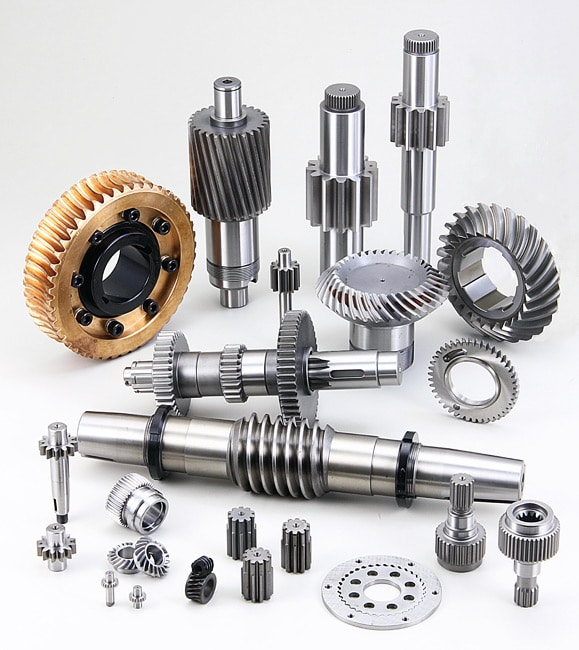
The worm screw is a critical component in numerous mechanical and industrial systems, offering the precision and torque conversion capabilities required for seamless motion transmission. From automotive gearboxes to food processing machinery and packaging automation, worm screws play a vital role in ensuring efficiency, reliability, and controlled power delivery. As industries evolve toward automation and higher performance standards, worm screw production solutions have become increasingly sophisticated, integrating advanced materials, machining technologies, and digital monitoring systems to maintain accuracy and quality at scale.
Understanding the Worm Screw and Its Applications
A worm screw, or worm gear, consists of a threaded shaft (the worm) that meshes with a toothed wheel (the worm wheel). This arrangement enables high torque transmission with minimal space requirements, making it ideal for compact systems that demand smooth, reduced-speed motion. The angled threads of the worm screw interact with the gear in such a way that it not only converts rotational motion but also provides a self-locking mechanism — a feature highly valued in lifting or positioning systems.
Common applications include:
- Industrial machinery such as conveyors, mixers, and presses
- Automotive systems, including steering mechanisms and differential drives
- Precision devices, like actuators and robotics
- Food and pharmaceutical equipment, where stainless-steel worm screws provide hygienic, corrosion-resistant performance
Given these diverse demands, manufacturers must adopt production solutions that balance durability, precision, and cost-efficiency.
Advanced Materials and Surface Treatments
The foundation of any efficient worm screw lies in material selection. Modern production processes utilize a variety of materials depending on load, speed, and environmental conditions. Alloy steels, case-hardened steels, and bronze are common, though increasingly, stainless steel and engineered plastics are used to meet specific regulatory or performance requirements.
To enhance performance, surface treatments play a key role. Techniques such as carburizing, nitriding, and induction hardening improve wear resistance and reduce friction. In high-performance applications, coatings like PVD (Physical Vapor Deposition) and Teflon-based finishes can further minimize wear and improve longevity by reducing heat buildup during operation. Advanced material science not only increases efficiency but also extends the life cycle of components, contributing to overall cost reduction for manufacturers and end-users alike.
Precision Machining and Automation Technologies
Modern worm screw production demands micron-level accuracy. Traditional thread-cutting and milling methods have largely been replaced or augmented by CNC machining, grinding, and hobbing technologies. CNC systems allow for greater control over geometry, ensuring consistent pitch, lead angle, and surface finish. At the same time, five-axis machining enables complex forms and high-speed production without sacrificing precision.
Another major development in worm screw production solutions is automation. Robotics and integrated production lines allow manufacturers to achieve higher throughput and tighter tolerances while minimizing human error. Real-time measurement systems, such as laser scanning and coordinate measuring machines (CMM), are now standard across advanced facilities, ensuring that every worm screw meets the defined specification before assembly.
Automation also supports mass customization, allowing manufacturers to produce small batches or even single custom components efficiently. This flexibility has become a competitive advantage in industries that demand tailored solutions, such as aerospace and medical manufacturing.
Digitalization and Quality Control
The rise of Industry 4.0 has transformed worm screw production into a connected, data-driven process. Smart manufacturing systems collect performance data at every stage — from machining temperatures to tool wear — allowing predictive maintenance and real-time optimization. This reduces downtime and waste, improving sustainability and cost-effectiveness.
Digital twin technology, which creates a virtual model of the production process, allows engineers to simulate material behavior and machining outcomes before actual production begins. This reduces prototyping costs and ensures the best possible process parameters are selected early in development.
Quality control now integrates advanced analytic tools and AI-based inspection systems to detect even the most subtle deviations from design specifications. These innovations ensure that worm screws deliver consistent performance, especially in critical mechanical systems where failure could have significant consequences.
Sustainability and Future Trends
Sustainability has become a cornerstone of modern manufacturing, and worm screw production is no exception. The use of recyclable materials, energy-efficient machinery, and waste reduction programs all contribute to greener production processes. Additionally, additive manufacturing, or 3D metal printing, is emerging as a promising technique for rapid prototyping and small-scale production, allowing for complex geometries and reduced material consumption.
Future worm screw production solutions will likely continue blending precision engineering, smart automation, and sustainability. The integration of AI-based design optimization, along with lightweight materials, will further improve performance and energy efficiency across a wide range of industrial applications.
Conclusion
Worm screw production is a field where mechanical precision meets advanced technology. With innovations in materials, CNC machining, automation, and digital monitoring, manufacturers can now deliver unparalleled quality, reliability, and customization. As industries worldwide push for smarter, greener, and more efficient systems, the evolution of worm screw production solutions will remain at the heart of mechanical progress — driving motion, productivity, and performance forward.