A prince rupert’s drop for sale is more than an unusual glass object. It is a remarkable demonstration of how heat, cooling, and internal stress can transform ordinary glass into something with surprisingly unusual properties. These small, tadpole-shaped pieces of glass have fascinated scientists, collectors, educators, and curious observers for centuries. Their combination of beauty and dramatic behavior makes them an intriguing addition to a science collection or educational display.
What Is a Prince Rupert’s Drop?
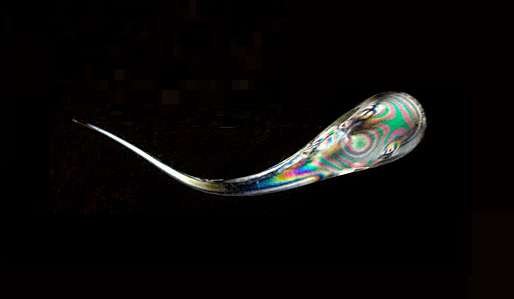
A Prince Rupert’s Drop is a piece of glass formed by allowing molten glass to fall into cold water. The sudden cooling process creates a distinctive shape with a rounded head and a thin, elongated tail. Although the finished object may look delicate, its internal structure is anything but simple.
The unusual characteristics of the drop come from the way the glass cools. When the molten glass enters cold water, the outer surface cools and solidifies very quickly. The interior remains hot for longer, allowing it to cool at a different rate. This uneven cooling produces powerful internal stresses throughout the glass.
The result is a fascinating object that can withstand considerable force around its rounded head while remaining extremely sensitive at its narrow tail.
The Science Behind Its Strength
The most interesting feature of a Prince Rupert’s Drop is the relationship between its surface and internal stresses. As the exterior cools rapidly, it contracts while the warmer interior continues changing. This creates compressive stress near the surface and tensile stress deeper inside.
Compressive stress can make the rounded portion of the drop surprisingly resistant to impact. Under certain conditions, striking the bulbous end with a hammer may not immediately destroy it. The glass can appear almost remarkably strong compared with ordinary glass.
However, this strength does not mean the drop is indestructible. The thin tail is highly vulnerable. If the tail is damaged or fractured, the internal stress can trigger a rapid fracture through the entire drop.
This unusual contrast between apparent toughness and extreme fragility is what makes the object so valuable for demonstrations of material science.
Why Does a Prince Rupert’s Drop Explode?
The dramatic destruction of a Prince Rupert’s Drop is one of the main reasons people find it so fascinating. When the tail breaks, a fracture can travel through the highly stressed glass at tremendous speed.
The stored elastic energy inside the drop is suddenly released. Instead of breaking into only a few large pieces, the glass can disintegrate into many tiny fragments.
This phenomenon is often described as an explosion, although it is not a chemical explosion. No combustible material is involved. The dramatic effect is caused by the rapid release of mechanical energy stored in the stressed glass.
A prince rupert’s drop for sale can therefore be both a collectible and an educational demonstration of fracture mechanics, provided it is handled responsibly.
A Brief History of the Glass Curiosity
Prince Rupert’s Drops are associated with Prince Rupert of the Rhine, a seventeenth-century European military commander, scientist, and member of the English royal family. The objects became known in England during the 1660s and were presented to the Royal Society.
Their unusual behavior quickly attracted scientific attention. Researchers wanted to understand why the drops could resist substantial impact but then shatter so dramatically when their tails were damaged.
The phenomenon contributed to early investigations into glass strength and fracture. Although modern materials science provides a much more detailed explanation, the basic curiosity remains the same: how can a small piece of glass behave so differently depending on where it is touched or damaged?
What Makes These Drops So Interesting to Collectors?
Collectors are often attracted to Prince Rupert’s Drops because they combine historical scientific curiosity with visual simplicity. Each drop has a distinctive shape, and its transparent appearance allows viewers to appreciate the relationship between form and material.
Unlike many decorative objects, the appeal of a Prince Rupert’s Drop comes largely from its scientific story. It can serve as a conversation piece, classroom specimen, laboratory demonstration, or addition to a collection of unusual scientific objects.
People searching for a prince rupert’s drop for sale may also appreciate the opportunity to own an object that illustrates a real physical principle rather than simply serving as decoration.
Choosing a Prince Rupert’s Drop
When considering a Prince Rupert’s Drop, buyers should pay attention to the quality and presentation of the specimen. A well-formed drop generally has a recognizable rounded head and narrow tail. The surface should be reasonably clear and free from obvious accidental damage.
The tail deserves particular attention because it is the most vulnerable part. Even a small defect can affect the integrity of the drop. For this reason, specimens should be packaged carefully and inspected without unnecessary handling.
Buyers should also consider whether they want a specimen for display, education, experimentation, or collecting. A display piece may be selected primarily for appearance, while an educational specimen may come with information explaining its formation and physical properties.
Handling and Display Considerations
Because Prince Rupert’s Drops contain significant internal stresses, they should be treated as specialized glass objects rather than ordinary decorative pieces. The fragile tail should not be squeezed, struck, bent, or deliberately damaged.
A secure display case can help protect the drop from accidental contact. Keeping it in a stable location away from children, pets, and areas of frequent movement is also sensible.
Anyone conducting demonstrations should follow appropriate laboratory or educational safety procedures. Protective equipment and suitable containment can help reduce the risk associated with flying glass fragments if a drop is intentionally broken.
The Educational Value of Prince Rupert’s Drops
One reason these glass objects remain popular is their ability to demonstrate several scientific concepts with a single specimen. They can introduce students to thermal shock, rapid cooling, residual stress, elasticity, fracture propagation, and material strength.
Teachers and science enthusiasts can use the drop to explain how manufacturing processes affect the properties of materials. The object also provides a useful reminder that strength is not always a simple characteristic.
A material can be extremely resistant to one type of force while remaining vulnerable to another. The Prince Rupert’s Drop demonstrates this principle in a particularly memorable way.
Prince Rupert’s Drop in Modern Materials Science
Although the original drops are centuries old, researchers continue to study their unusual fracture behavior. Modern high-speed cameras and advanced computer simulations allow scientists to examine how cracks move through stressed glass.
The drops offer an accessible example of concepts that are important in engineering and materials science. Understanding stress distribution and crack propagation is relevant to the development of stronger glass, ceramics, protective materials, and other engineered products.
The tiny glass object therefore connects historical experimentation with modern scientific research.
Why the Fascination Continues
The enduring appeal of a prince rupert’s drop for sale comes from its combination of simplicity and mystery. At first glance, it is simply a small piece of transparent glass. A closer look reveals a carefully created structure containing enough stored stress to produce spectacular behavior.
Its history adds another layer of interest, connecting modern collectors with scientific curiosity from the seventeenth century. Its appearance makes it suitable for display, while its physical properties make it an excellent teaching tool.
Whether viewed as a historical curiosity, a scientific specimen, or an unusual collectible, the Prince Rupert’s Drop demonstrates that everyday materials can behave in extraordinary ways. This small glass drop continues to capture attention because it turns an invisible concept—internal stress—into something that can be seen, studied, and understood.