

Social media has transformed the way people communicate, discover new products, follow trends, and consume entertainment. Platforms such as Instagram, YouTube, TikTok, and Facebook have created opportunities for individuals to build global audiences and turn their creativity into successful careers. Today, the biggest influencers biggest influencers in the world are more than internet celebrities. They are entrepreneurs, entertainers, educators, athletes, and business leaders who can shape public conversations and influence consumer decisions.
As digital platforms continue to evolve, understanding who leads social media and why their content attracts millions of followers has become increasingly important. From entertaining videos to lifestyle content and business advice, leading influencers have developed different strategies to maintain their popularity and connect with audiences around the world.
Understanding the Rise of Social Media Influencers
A social media influencer is someone who builds an audience through online content and can affect the opinions, interests, or purchasing decisions of their followers. Influencers may specialize in comedy, gaming, fashion, beauty, fitness, technology, travel, or education.
The rise of smartphones, affordable internet access, and short-form video has made content creation more accessible than ever. People no longer need traditional television networks or publishing companies to reach international audiences. A single creative video can attract millions of views within hours.
Influencers have also changed digital marketing. Businesses collaborate with creators to introduce products, increase brand awareness, and reach specific audiences. This combination of entertainment, community building, and commercial opportunity has made influencer marketing a major part of the modern digital economy.
The Biggest Influencers Leading Social Media Today
Social media leadership changes frequently because follower counts, engagement rates, and viral trends fluctuate. However, several creators and public figures have established themselves as influential names across major platforms.
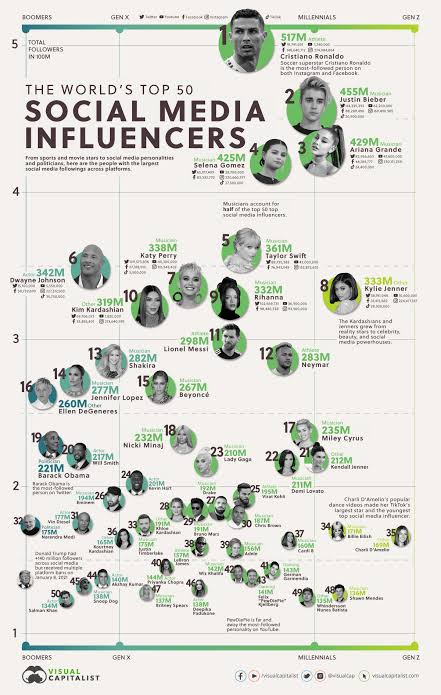
1. Cristiano Ronaldo: A Global Social Media Powerhouse
Cristiano Ronaldo is one of the most recognizable athletes in the world and a leading figure on Instagram. His popularity extends beyond football, attracting followers interested in sports, fitness, family life, fashion, and his business ventures.
Ronaldo’s social media success comes from his international reputation, consistent posting, and ability to connect with fans from different countries. His content combines professional achievements with personal moments, giving followers multiple reasons to remain engaged.
His influence also makes him an attractive partner for global brands. Companies use his reach to introduce products to audiences across different markets, demonstrating how celebrity influence can extend far beyond a single industry.
2. MrBeast: Redefining YouTube Entertainment
MrBeast, the online name of Jimmy Donaldson, has become one of the most influential creators in digital entertainment. His YouTube videos are known for ambitious challenges, large-scale competitions, creative concepts, and charitable projects.
His content frequently relies on strong storytelling, immediate audience interest, and a clear payoff. Rather than simply recording everyday activities, he develops elaborate productions designed to keep viewers watching.
MrBeast has also expanded beyond video creation through business ventures and other entertainment projects. His approach demonstrates that successful influencers can build media businesses around their online audiences.
3. Khaby Lame: The Power of Simple Comedy
Khaby Lame rose to international fame through short videos that humorously respond to unnecessarily complicated life hacks. His expressive reactions and simple visual storytelling have helped him reach audiences who speak different languages.
His success highlights an important characteristic of social media: content does not always require dialogue to become globally popular. Humor, facial expressions, and relatable situations can communicate ideas across cultural and linguistic boundaries.
Khaby’s journey also demonstrates how TikTok and similar platforms can introduce relatively unknown creators to worldwide audiences in a short period.
4. Charli D’Amelio: A Pioneer of Short-Form Video
Charli D’Amelio became widely known through dance videos and short-form entertainment on TikTok. Her popularity helped demonstrate the platform’s ability to turn ordinary creative content into a large-scale entertainment career.
Over time, her public presence has expanded into brand partnerships, lifestyle projects, and other entertainment opportunities. Her career illustrates how creators can move beyond one platform or content format as their audiences grow.
Her experience also reflects the competitive nature of influencer culture, where maintaining audience interest requires adaptation and a willingness to explore new ideas.
5. MrBeast and Other Major YouTube Creators
YouTube remains an important home for influencers who produce longer videos, educational content, gaming entertainment, and documentaries. Alongside MrBeast, creators such as Mark Rober have built substantial audiences through distinctive content.
Mark Rober combines engineering, science experiments, and entertaining explanations. His videos make complex concepts accessible while encouraging curiosity about science and technology.
Creators in this category show that influencer success is not limited to comedy or celebrity news. Educational storytelling can also attract enormous audiences when presented in an engaging format.
6. Addison Rae: From TikTok Creator to Entertainer
Addison Rae first gained widespread attention through dance and lifestyle content on TikTok. Her online popularity helped create opportunities in music, acting, beauty, and fashion.
Her career demonstrates how social media can serve as a starting point for broader entertainment ambitions. A creator can use an established audience to introduce new projects and build recognition in industries that once depended heavily on traditional media.
This transition is particularly important for influencers seeking long-term careers rather than relying exclusively on viral videos.
7. Emma Chamberlain: Authenticity and Lifestyle Content
Emma Chamberlain became popular through conversational videos, personal storytelling, humor, and an informal presentation style. Her content helped establish a different approach to online celebrity, one that feels less polished and more personal.
She has also developed a presence in fashion and business, showing how an individual creator’s identity can become a recognizable brand.
Her success illustrates that audiences do not always want elaborate productions. Many viewers appreciate content that feels relatable, distinctive, and consistent with a creator’s personality.
What Makes These Influencers So Successful?
Although leading influencers work in different industries, several common factors help explain their popularity.
Consistent and Engaging Content
Successful creators regularly publish content that reflects their audience’s interests. Consistency helps viewers know what to expect, while experimentation allows creators to discover new formats and ideas.
However, posting frequently is not enough. Content must provide entertainment, information, inspiration, or another clear reason for people to watch and share it.
A Strong Personal Brand
Influencers often develop recognizable styles, communication habits, and subject areas. A distinct identity helps audiences remember them among thousands of competing creators.
Some focus on comedy, while others specialize in beauty advice, gaming, fitness, or educational entertainment. A clear focus makes it easier for viewers to understand what a creator offers.
Audience Engagement
Leading influencers understand that social media involves more than broadcasting content. Responding to comments, asking questions, sharing personal experiences, and participating in trends can strengthen relationships with followers.
An active community can also help content spread through recommendations and sharing.
Understanding Platform Algorithms
Different platforms prioritize different content signals. Watch time, audience retention, interactions, viewing preferences, and content relevance can affect how posts are recommended.
Successful creators study performance data and adapt their strategies. Nevertheless, algorithms change regularly, so no influencer can guarantee that every post will reach a large audience.
How Influencers Make Money
Influencer income comes from several sources, and the available opportunities depend on audience size, content type, location, and platform policies.
Common revenue streams include sponsored posts, advertising revenue, affiliate marketing, merchandise, paid subscriptions, and personal businesses. Some creators also earn money through live-streaming features, public appearances, or licensing agreements.
A large follower count does not automatically guarantee high earnings. An influencer with a smaller but highly engaged audience may provide significant value to a business targeting a specific group.
For this reason, brands increasingly consider audience relevance, engagement quality, content credibility, and campaign results when selecting creators for partnerships.
The Role of Influencers in Modern Digital Marketing
Influencers have become important partners for companies looking to reach consumers through social media. Traditional advertising often delivers a direct promotional message, whereas creator-led campaigns can introduce products through demonstrations, tutorials, reviews, and personal experiences.
For example, a technology creator might explain how a device works, while a travel influencer could document a destination. These formats provide context that helps audiences understand a product or service.
However, successful partnerships require transparency. Sponsored content should be disclosed appropriately, and creators should avoid making unsupported claims. Trust is one of an influencer’s most valuable assets, and misleading promotions can damage both personal and commercial reputations.
Challenges Facing Social Media Influencers
Despite the opportunities, influencer careers come with significant challenges. Competition is intense, audience preferences change quickly, and platform algorithms can reduce visibility without warning.
Creators must also manage public criticism, privacy concerns, demanding production schedules, and pressure to maintain a consistent online presence. Depending entirely on one platform can be risky, particularly when policies or monetization systems change.
Diversifying content channels, developing independent businesses, protecting personal information, and maintaining realistic work schedules can help creators build more sustainable careers.
Audiences also have a role to play. Evaluating claims carefully, recognizing sponsored content, and avoiding comparisons based solely on online popularity can encourage healthier and more responsible social media use.
The Future of the World’s Biggest Influencers
The influencer industry will continue to evolve as artificial intelligence, new video formats, live streaming, and emerging platforms change how people discover content. AI tools may help creators with editing, translation, research, and production, while personalized recommendations will continue shaping what audiences see.
At the same time, authenticity and trust are likely to remain important. Audiences can access enormous amounts of content, but creators who offer a distinctive perspective and meaningful value have a stronger foundation for building lasting communities.
Influence may also become more specialized. Alongside global celebrities, experts in technology, education, finance, health, and niche hobbies can build valuable audiences by serving particular interests.
Conclusion
The biggest influencers in the world have changed entertainment, marketing, and digital communication. Figures such as Cristiano Ronaldo, MrBeast, Khaby Lame, Charli D’Amelio, Addison Rae, Mark Rober, and Emma Chamberlain demonstrate the many ways people can build global recognition through online platforms.
Their success comes from a combination of creativity, consistency, audience understanding, and the ability to adapt to changing digital trends. However, social media leadership is not determined by follower counts alone. Engagement, credibility, relevance, and lasting audience relationships also matter.
As social media continues to develop, new creators will emerge and established names will explore new opportunities. For businesses, aspiring creators, and everyday users, understanding these changes offers valuable insight into how digital influence works and why certain personalities capture the world’s attention.