

The roofing industry depends on high-quality materials, consistent production, and timely delivery to meet the growing demand for residential, commercial, and industrial construction projects. Manufacturers must produce roofing sheets in different sizes, profiles, and thicknesses while maintaining accuracy and controlling operational costs. Traditional sheet-forming methods can require considerable manual effort and time, making it difficult for businesses to achieve high production targets. Modern roofing sheet roll forming machines offer an effective solution by automating the manufacturing process and improving overall efficiency.
These machines are designed to transform flat metal coils into finished roofing sheets through a continuous forming process. With advanced technology, automated controls, and precision engineering, manufacturers can increase production speed, reduce material waste, and maintain consistent product quality. Understanding how these machines improve manufacturing operations can help businesses make better equipment investments and strengthen their competitiveness.
Understanding the Working Process of Roofing Sheet Roll Forming Machines
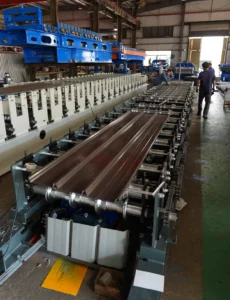
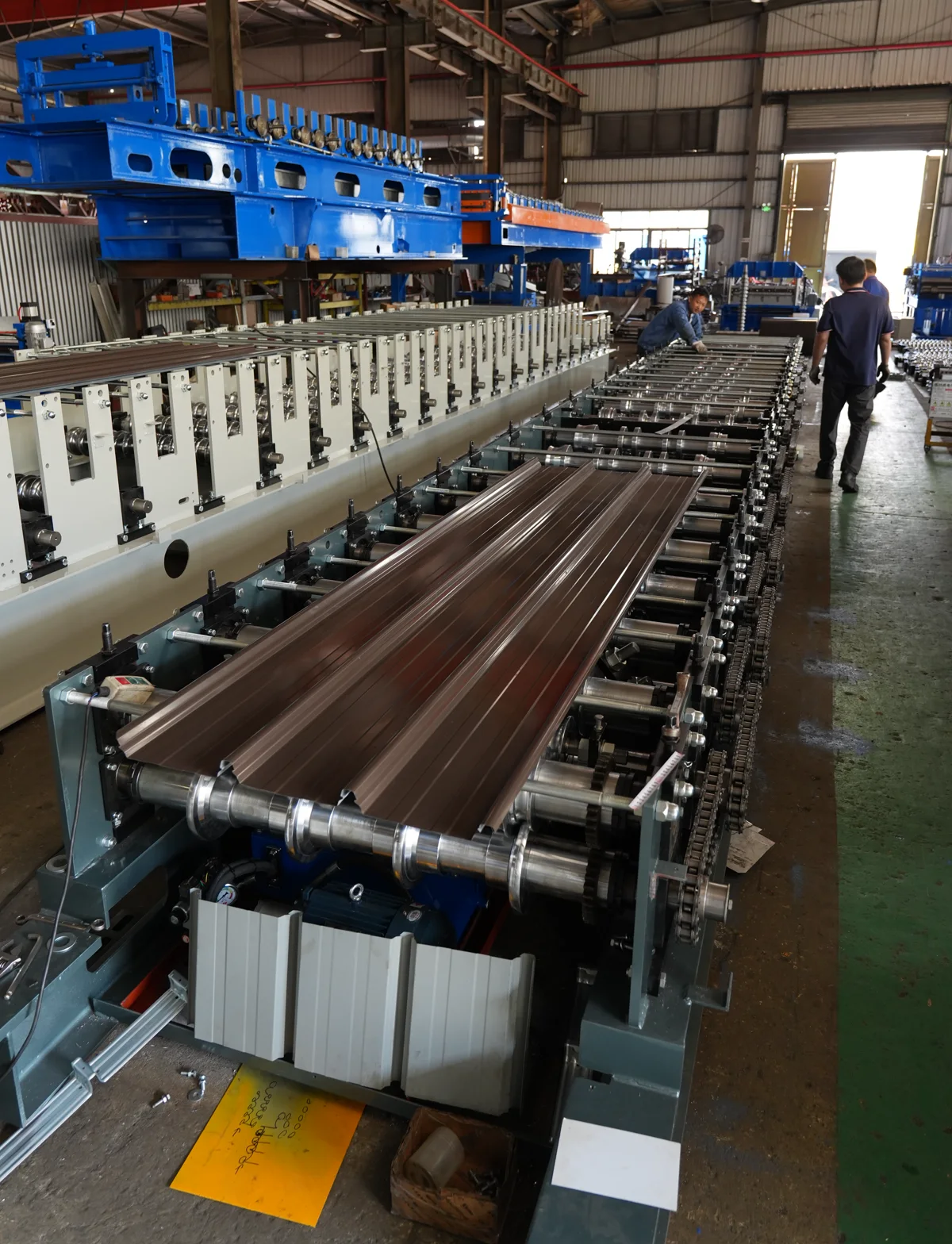
Roofing sheet roll forming machines use a series of rollers to gradually shape flat metal strips into specific roofing profiles. The process begins with loading a metal coil onto a decoiler, which feeds the material into the forming section. As the metal passes through multiple roller stations, it gradually takes the required shape without requiring repeated manual adjustments.
Once the material reaches the desired profile, an automatic cutting system cuts it into predetermined lengths. The finished sheets are then collected for inspection, packaging, and transportation.
This continuous manufacturing process allows roofing sheet roll forming machines to produce large quantities of metal sheets with consistent dimensions. Since most operations are automated, manufacturers can reduce unnecessary handling and complete production orders more efficiently.
How Automation Increases Production Speed
Automation is one of the most important advantages of modern roll forming technology. Traditional manufacturing methods often involve several manual operations, including material positioning, shaping, measuring, and cutting. These activities can slow production and increase the possibility of human error.
Modern machines combine these operations into a coordinated production line. Automated feeding systems move metal coils through the equipment, while computerized controls manage forming speed, cutting lengths, and production settings.
Continuous Material Feeding
Continuous feeding eliminates frequent interruptions during manufacturing. Once the metal coil is installed, the machine can process material through multiple forming stations without stopping after every sheet.
This uninterrupted workflow allows manufacturers to produce more roofing sheets within a shorter period. It also reduces the time employees spend handling individual metal pieces.
Automatic Cutting Systems
Automatic cutting systems improve production speed by cutting roofing sheets according to programmed measurements. Operators can enter the required dimensions into the control panel, allowing the machine to perform accurate cutting operations.
This reduces measuring errors and eliminates much of the manual cutting work. Manufacturers can also switch between different sheet lengths more conveniently when production requirements change.
Improving Manufacturing Accuracy and Product Consistency
Production speed is important, but accuracy is equally essential in roofing sheet manufacturing. Incorrect dimensions, uneven profiles, and inconsistent shapes can create installation difficulties and increase material rejection rates.
Roofing sheet roll forming machines are designed to maintain consistent pressure and alignment throughout the forming process. Precision-engineered rollers gradually shape the metal, helping manufacturers achieve uniform profiles across large production batches.
Precision Roller Design
The roller system determines the final shape and quality of roofing sheets. Properly designed rollers ensure that metal passes smoothly through each forming station without unnecessary deformation.
Advanced equipment uses carefully manufactured roller components to maintain profile accuracy and reduce surface damage. This helps businesses produce roofing materials that meet customer specifications and industry requirements.
Consistent Sheet Dimensions
Computerized control systems allow operators to program specific measurements and repeat production settings. This ensures that multiple sheets can be manufactured with similar lengths, widths, and profiles.
Consistent dimensions simplify installation and improve the overall appearance of completed roofing projects.
Reducing Material Waste and Operational Costs
Material waste can significantly affect manufacturing profitability. Poor cutting accuracy, incorrect measurements, and inconsistent forming operations may result in damaged or unusable metal sheets.
Modern roofing sheet roll forming machines help reduce these problems through automated measurement and controlled production processes. Accurate cutting systems minimize unnecessary material loss, while stable roller arrangements reduce the risk of defective products.
Lower material waste means manufacturers can make better use of every metal coil. Over time, even small improvements in material utilization can create meaningful cost savings.
Automation also reduces labor requirements for repetitive manufacturing activities. Instead of assigning multiple employees to manual forming and cutting tasks, businesses can organize their workforce around machine operation, quality inspection, maintenance, and packaging.
Increasing Production Flexibility for Different Roofing Profiles
Customer requirements vary depending on building designs, construction materials, weather conditions, and architectural preferences. Roofing manufacturers may need to produce corrugated sheets, trapezoidal profiles, and other specialized designs.
Modern roll forming equipment can be configured to manufacture different roofing profiles according to production requirements. Some systems offer adjustable settings or interchangeable roller components that support different product specifications.
Faster Product Changeovers
Flexible machine configurations allow manufacturers to respond to changing orders without completely redesigning their production processes. Programmable controls can simplify adjustments to sheet lengths and operating parameters.
Faster changeovers reduce downtime and make it easier for businesses to manage smaller customized orders alongside large production runs.
Supporting Custom Manufacturing
Construction companies frequently request roofing sheets with specific dimensions, thicknesses, and profiles. Flexible production equipment helps manufacturers accommodate these requirements while maintaining consistent quality.
This adaptability allows businesses to serve a wider customer base and explore additional market opportunities.
Improving Labor Productivity and Workplace Safety
Manual manufacturing operations can require employees to handle heavy metal sheets, operate cutting equipment, and perform repetitive physical activities. These tasks may increase fatigue and create workplace safety risks.
Automated roofing sheet roll forming machines reduce the need for direct manual involvement in several production stages. Employees can supervise the equipment through control panels rather than continuously handling raw materials.
Safety features such as emergency stop buttons, protective covers, and properly designed operating systems can further improve workplace conditions. However, manufacturers must still provide appropriate training and follow equipment safety procedures.
With better automation, employees can focus on activities that require technical knowledge and decision-making. This improves labor productivity while helping businesses organize their manufacturing facilities more effectively.
The Role of Advanced Control Systems in Manufacturing Efficiency
Modern manufacturing equipment increasingly uses digital technologies to improve operational performance. Computerized control panels allow operators to monitor machine settings, adjust production parameters, and manage cutting operations from a centralized interface.
Some advanced roofing sheet roll forming machines also incorporate sensors and monitoring systems that help identify operational irregularities. These technologies can provide useful information about machine performance and production conditions.
Real-Time Production Monitoring
Production monitoring allows operators to observe operating speed, production quantities, and machine status. Identifying performance issues early can help prevent unexpected interruptions.
Manufacturers can use production data to understand workflow efficiency, identify bottlenecks, and improve scheduling decisions.
Better Maintenance Planning
Regular maintenance is essential for keeping machinery operating efficiently. Monitoring equipment performance can help maintenance teams identify unusual conditions before they develop into major mechanical problems.
Preventive maintenance reduces unexpected downtime and extends the useful life of important machine components.
Reducing Downtime Through Reliable Machine Design
Unexpected machine stoppages can delay orders, increase operating costs, and disrupt manufacturing schedules. Reliable equipment design plays an important role in maintaining continuous production.
High-quality components, durable roller systems, stable frames, and properly configured electrical systems contribute to dependable machine performance.
Manufacturers should also establish regular inspection schedules to check rollers, bearings, cutting blades, motors, and electrical connections. Replacing worn components at the appropriate time helps prevent serious equipment failures.
Choosing reliable machinery from an experienced manufacturer can also make a difference. Businesses should evaluate equipment construction, technical support, spare parts availability, and installation assistance before making purchasing decisions.
Choosing the Right Machine for Maximum Productivity
Selecting suitable equipment is essential for achieving the desired production speed and manufacturing efficiency. Different businesses have different requirements depending on their production volumes, available workspace, material specifications, and product ranges.
Before purchasing roofing sheet roll forming machines, manufacturers should consider several important factors:
- Production capacity: Select equipment that matches current manufacturing requirements and expected future demand.
- Material compatibility: Check whether the machine supports the required metal types and thicknesses.
- Profile specifications: Ensure that the equipment can produce the roofing designs customers regularly request.
- Automation features: Evaluate feeding, cutting, and control systems to determine how much manual work can be reduced.
- Machine durability: Consider the quality of rollers, frames, motors, and other essential components.
- Technical support: Choose a supplier that can provide installation guidance, maintenance assistance, and replacement parts.
Making an informed investment helps businesses avoid unnecessary operating expenses and achieve better long-term results.
Conclusion
Roofing sheet roll forming machines have become essential equipment for manufacturers looking to improve production speed, product quality, and operational efficiency. Their automated feeding systems, precision rollers, computerized controls, and automatic cutting mechanisms help streamline manufacturing activities while reducing manual labor and material waste.
These machines also provide greater flexibility for producing different roofing profiles and customized sheet dimensions. Combined with proper maintenance, employee training, and reliable equipment selection, they can help manufacturers achieve consistent production performance.
As construction demand continues to evolve, investing in modern roll forming technology can give roofing manufacturers an important competitive advantage. By improving workflow management, minimizing downtime, and maintaining product consistency, businesses can increase productivity and build a more efficient manufacturing operation.