
Coffee Shops, Corporate Offices, and Nonprofits — The Hidden Ecosystem of Midtown and Downtown
Every door on every Manhattan block conceals a story. Behind the revolving glass of a Park Avenue tower, a corporate team is navigating a merger worth billions. Three blocks away, behind the unmarked entrance of a converted loft, a nonprofit is coordinating disaster relief for a country most Americans cannot find on a map. And on the corner, behind the steamed-up window of a corner café, a freelance designer is pitching a logo concept to a startup founder over pour-over coffee.
These stories are not isolated. They are threads in a single fabric — a commercial ecosystem so dense, so interdependent, and so relentlessly productive that it has made Manhattan the most economically influential 23 square miles on the planet. Understanding how the different threads connect — how corporate offices, nonprofits, and coffee shops support and depend on each other — is the key to understanding how Manhattan actually functions as a place of business.
This is a behind-the-scenes look at the relationships that make the island work, guided by data from a comprehensive Manhattan business resource and the lived experiences of the people who inhabit these spaces every day.
The Coffee Shop as Nervous System
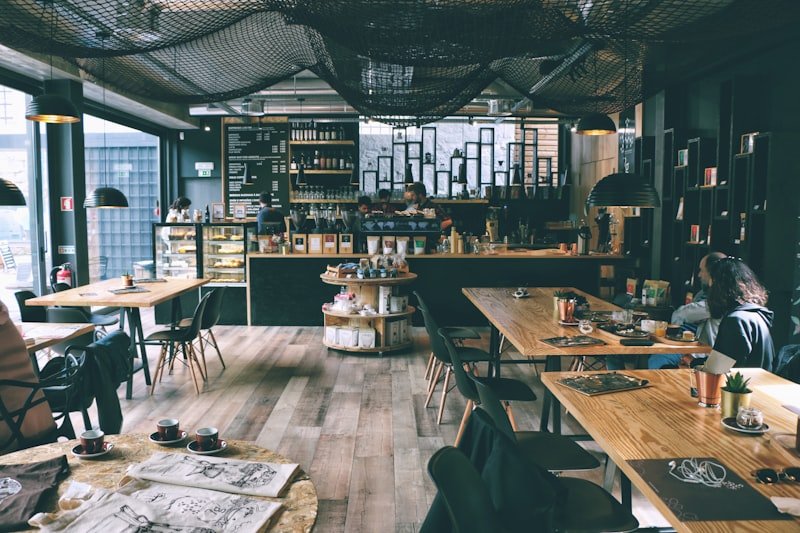
Start with the coffee shop, because everything starts with coffee. In Manhattan, the coffee shop is not a luxury or a diversion — it is infrastructure. It is the place where the day’s first decisions are made, the first emails are sent, the first conversations are had. For many Manhattanites, the morning coffee shop visit is as ritualistic and non-negotiable as brushing their teeth.
The coffee shops of Midtown Manhattan operate in a unique commercial context. They serve a clientele that is time-starved, quality-conscious, and socially aware. These are people who can taste the difference between single-origin Ethiopian and Guatemalan roasts, who know the barista’s name, and who choose their coffee shop not just for the quality of the espresso but for the quality of the environment. Is there Wi-Fi? Are there outlets? Is the noise level conducive to a phone call? Is the lighting good enough to read a contract?
The economic impact is substantial but underappreciated. A single Midtown coffee shop might serve 500 to 800 customers per day, generating annual revenue in the seven figures. But the business activity that the coffee shop facilitates — the deals discussed, the partnerships formed, the ideas exchanged — dwarfs its own revenue by orders of magnitude. The coffee shop is an economic multiplier, not just a business.
The Coffee Shop as Equalizer
One of the most underappreciated functions of the Manhattan coffee shop is its role as a social equalizer. In a city where access to space is determined primarily by wealth, the coffee shop offers a democratic commons where the hedge fund partner and the graduate student, the nonprofit director and the corporate intern, share the same physical space and the same basic experience. The $5 latte is, in Manhattan terms, one of the most affordable forms of access to productive, comfortable, climate-controlled workspace available.
This equalizing function has important implications for how nonprofit organizations operate. Many Manhattan nonprofits, particularly smaller ones, cannot afford dedicated meeting space. A coffee shop with adequate seating and a moderate noise level can serve as a de facto conference room — a place where the executive director meets with potential donors, where board members convene for informal strategy sessions, and where program staff conduct intake interviews with clients.
The Corporate Office: Ecosystem Anchor
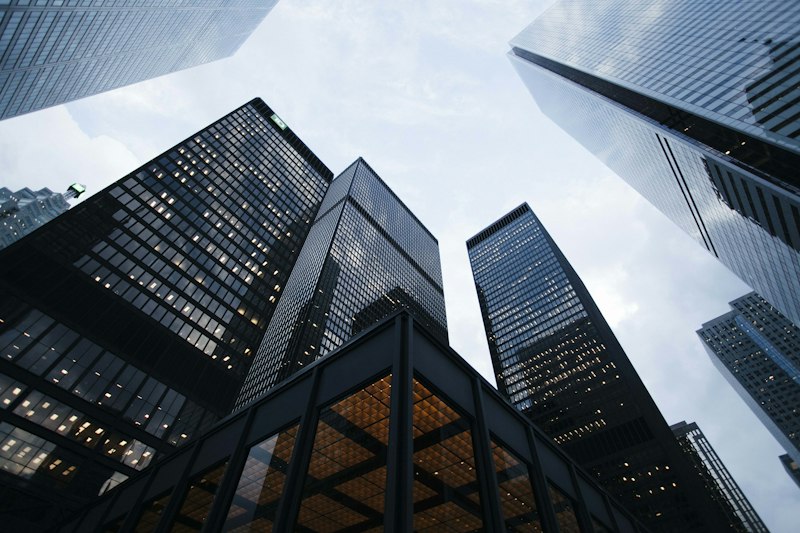
The corporate office is the gravitational center of Manhattan’s business ecosystem. The hundreds of thousands of professionals who commute to Midtown and Downtown offices each day are not just employees — they are economic actors whose daily choices create demand for virtually every other category of business on the island.
Consider the ripple effects of a single corporate office. A 500-person office in Midtown generates demand for:
- Coffee shops — employees need their morning and afternoon caffeine fixes, and they want them within walking distance of the office.
- Restaurants — lunch is a daily necessity, and business dinners are a weekly occurrence. The surrounding restaurant scene adapts to serve both needs.
- Hotels — clients, recruits, and visiting executives need accommodation nearby. The hotel industry exists, in large part, to serve corporate demand.
- Nonprofit partners — corporate social responsibility programs direct funding, volunteers, and professional expertise toward local nonprofits.
- Support services — dry cleaners, pharmacies, gyms, and convenience stores all cluster around corporate offices to serve the daily needs of their employees.
The corporate offices in Downtown Manhattan generate similar ripple effects, but with important differences. Downtown’s growing residential population means that businesses here serve a dual audience — office workers during the day and residents in the evening and on weekends. This dual demand creates more stable revenue patterns for surrounding businesses, which is one reason why commercial rents in Downtown have been rising relative to Midtown.
The Corporate-Nonprofit Partnership
The relationship between corporate offices and nonprofit organizations in Manhattan is one of the most important and least visible dynamics in the island’s business ecosystem. Major corporations routinely provide nonprofits with:
- Financial support — direct grants, event sponsorships, and matching gift programs.
- Pro bono professional services — legal counsel, accounting, marketing strategy, and technology consulting.
- Board service — corporate executives serve on nonprofit boards, providing governance expertise and strategic guidance.
- Volunteer labor — organized volunteer programs channel employee energy toward community service projects.
The most successful nonprofits in Manhattan are those that understand the corporate ecosystem around them and position themselves as essential partners rather than passive recipients of charity.
The Infrastructure of Trust
What ultimately holds Manhattan’s business ecosystem together is not geography or economics — it is trust. The relationships between corporate offices, coffee shops, and nonprofits are built on personal connections that develop over years of shared space, shared meals, and shared challenges.
The corporate executive who has been buying coffee at the same shop for a decade has a relationship with the owner that may eventually lead to that shop catering the company’s holiday party. The nonprofit director who shares a coffee shop regular with a corporate CFO may eventually find an introduction that secures a transformative grant. The barista who remembers everyone’s order and greets regulars by name creates a sense of community belonging that keeps people coming back — and spending money — even when a cheaper or more convenient option exists.
These trust networks are invisible but essential. They cannot be replicated by technology, purchased by marketing, or manufactured by urban planning. They emerge organically from the daily proximity of people who share a geographic space and a common set of interests. This is, ultimately, why Manhattan’s business corridors are so difficult to replicate: the density of human connection that exists here has been building for over a century, and it cannot be shortcut.
Finding Your Place in the Ecosystem
Whether you are starting a business, joining a nonprofit, or simply looking for the right coffee shop, understanding Manhattan’s business ecosystem helps you make better decisions. A complete Manhattan directory provides the data — where to find the best coffee, where the corporations are, where the nonprofits operate — but the real intelligence comes from showing up, paying attention, and building relationships.
Manhattan rewards those who engage with it fully. Behind every door is an opportunity — and behind every opportunity is a human connection waiting to be made. The coffee is just the beginning.
How to Use These Hidden Networks
The businesses behind Manhattan’s doors are easiest to understand when they are viewed as a working system rather than isolated addresses. A coffee shop near a commuter hub may support early meetings, quick interviews, and informal client introductions. A Downtown office may depend on nearby legal, financial, design, and nonprofit partners. A Midtown nonprofit may use shared spaces and neighborhood cafes to stretch a limited budget while still maintaining a professional presence.
For visitors, entrepreneurs, and local residents, the useful question is not simply “What is nearby?” The better question is “Which nearby places make the day work?” Manhattan rewards this kind of practical thinking. The strongest daily routines usually combine a reliable workspace, a trusted place for meetings, a convenient lunch option, and a few professional services that can be reached without losing half the day in transit.
What Makes a Place Worth Returning To
Repeat use is the clearest sign that a business understands its neighborhood. A coffee shop becomes valuable when staff remember regulars, outlets are placed where people actually sit, and the room can handle both quick orders and longer conversations. A corporate office becomes valuable when it is connected to transit, clients, hospitality, and after-work services. A nonprofit becomes visible when its location supports community access as well as administrative work.
That is why Manhattan’s smaller business ecosystem matters so much. The island’s famous buildings create the skyline, but the everyday venues create the rhythm. They are the places where introductions happen, partnerships begin, and local trust is built through repeated, ordinary contact.
Why Small Places Carry Big Value
Manhattan’s smaller business spaces often create more practical value than their size suggests. A cafe with reliable seating can support dozens of meetings in a single day. A compact office can serve as a serious base when it is connected to transit, clients, and services. A nonprofit suite on an upper floor can influence public life far beyond the size of its staff. These places are easy to overlook because they are not always visible from the street, but they are part of the island’s working machinery.
For a new business, these hidden networks can reduce friction. The right neighborhood gives access to printing, banking, food, transportation, event venues, consultants, and potential partners. A founder or director who understands that ecosystem can move faster because fewer tasks require special planning. Manhattan’s density is useful only when it is readable; a directory helps turn that density into usable information.
Reading the Signals of a Healthy Business Block
A healthy business block usually has a mixture of steady anchors and flexible supporting services. Anchors create consistent foot traffic. Smaller services respond to that traffic with food, meetings, errands, and professional support. When both layers are present, a block becomes more resilient. If one business closes, the overall pattern can continue because the area has more than one reason for people to return.
That is why a single address rarely tells the whole story. The surrounding mix matters. A strong Manhattan location is not only a room, storefront, or office suite; it is the set of useful places around it. Businesses that understand this broader context are better prepared to choose spaces that support real daily work.
How Local Trust Forms in Manhattan
Trust in Manhattan often forms through repeated small interactions. A business owner returns to the same cafe because the room works for meetings. A nonprofit returns to the same print shop because deadlines are handled correctly. An office manager relies on the same nearby services because they solve problems quickly. These ordinary relationships are rarely visible in tourism guides, but they are part of what makes a neighborhood function.
For anyone trying to understand Manhattan’s business environment, these relationships matter as much as landmark buildings. The visible city may be built from towers, avenues, and famous addresses, but the usable city is built from dependable places that help people complete the day. A directory becomes valuable when it reveals that practical layer and helps users move from broad curiosity to specific decisions.