
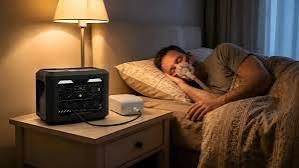
For people who rely on a CPAP machine during sleep, a power outage can create a serious inconvenience. CPAP therapy depends on a continuous power supply, so having a reliable CPAP battery backup for power outages can provide valuable peace of mind. Whether outages happen because of storms, electrical problems, or other unexpected events, a suitable backup battery can help keep your CPAP equipment operating when standard household electricity is unavailable.
A CPAP battery backup is designed to provide portable power to compatible CPAP or bilevel machines. However, choosing the right solution requires attention to battery capacity, machine compatibility, expected runtime, charging options, and safety. This guide explains the key considerations for selecting and preparing a CPAP battery backup for power outages.
Why a CPAP Battery Backup Is Important
A CPAP machine is normally plugged into a wall outlet and uses electricity throughout the night. During an unexpected outage, the machine may stop operating unless another power source is available.
A battery backup can act as an alternative source of electricity. Instead of relying entirely on the household electrical grid, users can connect their compatible CPAP equipment to a charged battery system.
Having backup power can be particularly useful for people who experience frequent outages or live in areas where severe weather can interrupt electricity service. It can also be useful while camping, traveling, or staying somewhere without convenient access to an electrical outlet.
How CPAP Battery Backups Work
CPAP battery backups store electrical energy that can later be used to power compatible equipment. Depending on the battery system, charging may be possible through a standard wall outlet, vehicle power connection, or another compatible charging source.
When household electricity is unavailable, the CPAP machine can be connected to the battery according to the manufacturer’s instructions. The battery then supplies the necessary power until it becomes depleted or normal electricity is restored.
Not every CPAP machine has identical power requirements. Some machines use different voltage levels, and features such as heated humidification can significantly increase energy consumption. For this reason, checking compatibility before purchasing a backup battery is essential.
Choosing the Right Battery Capacity
Battery capacity is one of the most important factors when selecting a CPAP battery backup for power outages. Capacity is commonly expressed in watt-hours (Wh), while some portable batteries may provide specifications in amp-hours (Ah).
A larger capacity generally means more stored energy and potentially longer operating time. However, actual runtime depends on the CPAP machine, pressure settings, accessories, and power-conversion losses.
For example, a CPAP setup operating without a heated humidifier may require substantially less energy than a setup using heated humidification and heated tubing. Therefore, the same battery can provide different runtimes depending on how the equipment is configured.
Rather than choosing a battery solely because it has a large capacity, users should compare the battery’s specifications with their particular CPAP machine.
Consider Your CPAP Machine’s Power Requirements
Before purchasing a battery backup, check the power information provided by the CPAP manufacturer. The machine’s manual, power adapter, or official product documentation may specify voltage, current, and wattage requirements.
This information helps determine whether a particular battery is suitable.
Users should also check whether their CPAP device requires a direct-current (DC) connection or normally operates through an alternating-current (AC) adapter. Some battery systems offer dedicated CPAP connections, while others use standard AC outlets.
Using the correct connection and voltage is important. Never modify cables or electrical connections unless the equipment manufacturer specifically supports the modification.
How Long Can a CPAP Battery Last?
There is no single runtime that applies to every CPAP battery backup. Runtime depends on several factors, including battery capacity and the amount of power consumed by the CPAP system.
A basic setup without optional high-power features may consume less electricity than a system using a humidifier, heated tubing, or other accessories.
For this reason, users should look for manufacturer-provided runtime estimates for their specific CPAP model. It can also be helpful to consider how long typical power outages last in the area.
Someone who usually experiences short interruptions may need a different backup solution from someone who regularly experiences overnight outages.
Humidifiers and Heated Tubing
Humidifiers and heated tubing can improve comfort for some CPAP users, but these features may require additional electricity. During a power outage, this increased energy consumption can reduce the amount of time a battery can operate the machine.
If battery runtime is a priority, users should review the CPAP manufacturer’s guidance about operating the machine without heated humidification or heated tubing. Any changes should be made according to the equipment manufacturer’s instructions and the user’s prescribed therapy requirements.
A battery designed specifically for CPAP equipment may provide useful information about expected runtime with different settings or accessories.
Charging Your Backup Battery
A backup battery is only useful during an outage if it has enough charge available. Establishing a regular charging routine can therefore be an important part of emergency preparation.
After using the battery, recharge it according to the manufacturer’s instructions. Even if the battery has not been used for a long time, periodically checking its charge level can help ensure that it is ready when needed.
Some portable power solutions can also be recharged from a vehicle or compatible alternative power source. These options can be valuable during extended outages when household electricity remains unavailable.
Preparing for Extended Power Outages
A CPAP battery backup should be part of a broader emergency plan. Before a major storm or other event, users can check the battery charge, inspect cables, and confirm that all necessary adapters are available.
It is also helpful to keep the CPAP machine, battery, cables, and power adapters together in an accessible location.
If an outage is expected to last for an extended period, users should follow guidance from their healthcare provider and CPAP manufacturer regarding continued therapy and equipment use.
Safety Considerations
Safety should always come first when using portable power equipment. Use batteries and cables that are compatible with the CPAP machine and follow the manufacturer’s instructions.
Avoid damaged batteries, frayed cables, or unauthorized electrical modifications. Batteries should also be stored and charged according to their manufacturer’s safety recommendations.
If a battery becomes unusually hot, swollen, damaged, or otherwise abnormal, stop using it and follow the manufacturer’s safety instructions.
Users should also understand that a battery backup is different from a medical recommendation. If there are concerns about interrupted CPAP therapy, it is appropriate to contact a healthcare professional for personalized guidance.
Portable Power Stations as an Alternative
Some people consider portable power stations instead of dedicated CPAP batteries. These devices can provide electrical power for multiple appliances and may offer several charging methods.
A portable power station can be useful during a household outage because it may support CPAP equipment along with other essential electronics. However, larger systems can be heavier and less convenient than compact CPAP-specific batteries.
When considering a portable power station, check its output specifications, battery capacity, operating method, and compatibility with the CPAP equipment.
Testing Your Backup System
Testing your backup system before an emergency is a smart step. Connect the CPAP equipment according to the manufacturer’s instructions and verify that the machine operates correctly.
You can also monitor how much battery capacity is used during a typical sleep period. This can provide a practical understanding of how the backup system performs with your particular setup.
A test can also reveal missing adapters, unsuitable cables, or other problems before an actual power outage occurs.
Final Thoughts
A dependable CPAP battery backup for power outages can be an important part of emergency preparedness for CPAP users. The best solution depends on the specific machine, battery capacity, expected outage duration, accessories being used, and available charging options.
Before purchasing a backup system, check the CPAP manufacturer’s power requirements and the battery manufacturer’s compatibility information. Consider the expected runtime, portability, charging methods, and safety features rather than focusing on capacity alone.
With the right preparation, users can have a practical backup power solution ready when household electricity is unexpectedly unavailable.