

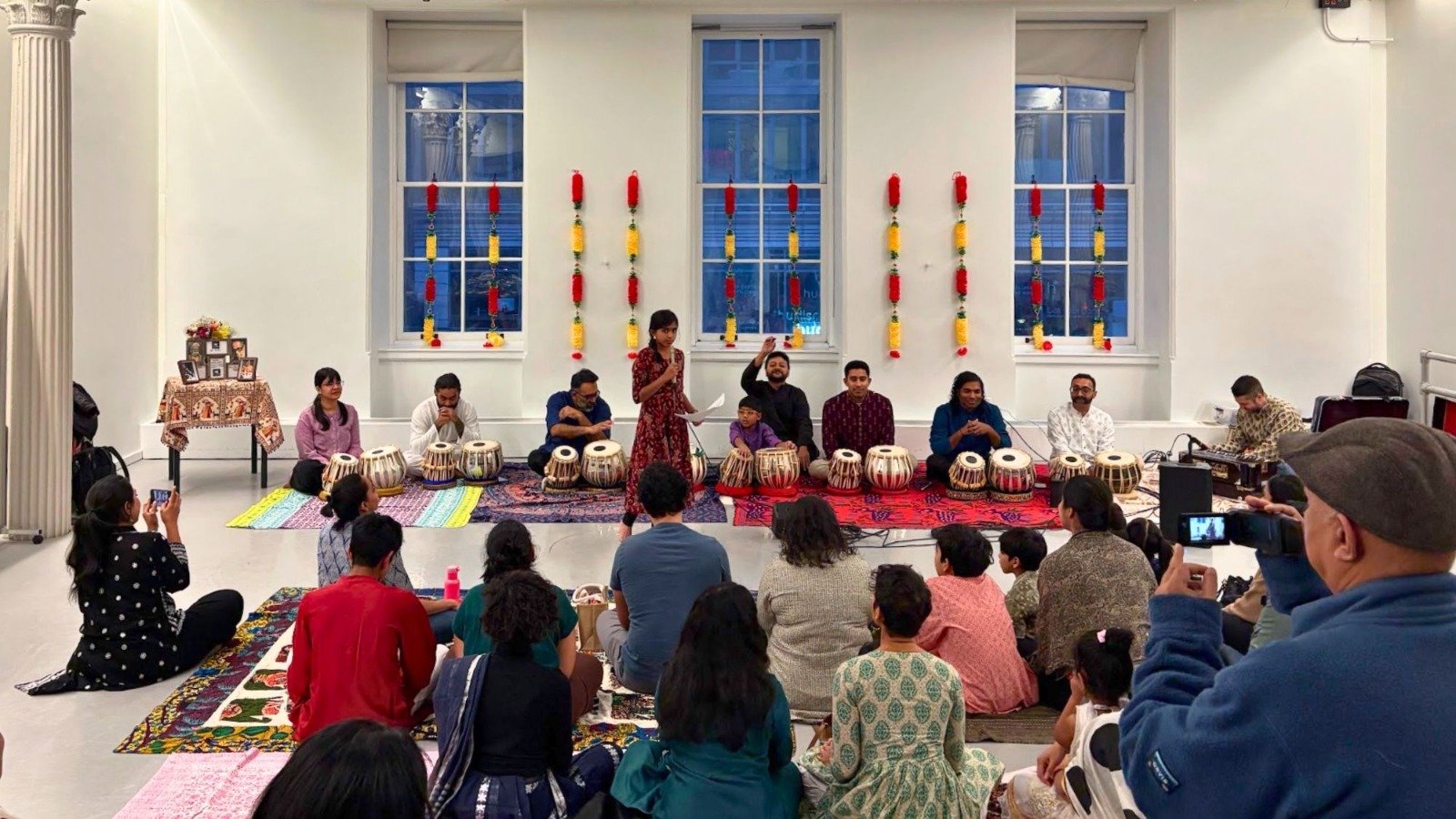
Indian classical music is a rich tapestry of rhythm, melody, and improvisation, and mastering the tabla is central to understanding its rhythmic structure. For students in metropolitan hubs such as New York, learning tabla offers both a profound cultural experience and a disciplined approach to rhythm. With a combination of technical precision, artistic expression, and ensemble sensitivity, tabla training can enhance one’s musicality and performance skills.
Structured Approach to Tabla Learning
The journey of mastering tabla often begins with understanding the instrument itself. The tabla comprises two drums: the smaller, high-pitched dayan, usually played with the dominant hand, and the larger, bass-rich bayan, typically played with the non-dominant hand. Each drum produces a variety of sounds through nuanced hand and finger techniques. Students typically start with basic strokes, or bols, such as “ta,” “na,” “tin,” “dha,” and “ge,” learning to execute them with clarity and consistency.
A structured curriculum in tabla classes often mirrors Western conservatory principles, emphasizing sequential learning. Beginners start with simple compositions in common talas, such as Teentaal (16 beats) and Dadra (6 beats), gradually advancing to complex rhythmic patterns. By integrating theory with practical exercises, students develop both technical skill and an understanding of rhythmic grammar. Many tabla programs in NYC offer tiered courses, allowing learners to progress at a pace suited to their musical background.
Developing Technique and Dexterity
Technique is the foundation of tabla mastery. Effective hand positioning, finger strength, and wrist flexibility are critical for producing precise, resonant sounds. Exercises typically focus on repetition and articulation, ensuring that each stroke is distinct. Advanced students explore rapid-fire sequences, intricate cross-hand patterns, and dynamic control, allowing for expressive variation in tempo and tone.
Regular practice in a structured environment helps students develop muscle memory and control over tonal variation. For Western-trained musicians, these exercises may resemble technical drills in piano or percussion, yet they retain the cultural context of Indian rhythm. Incorporating slow, deliberate practice with metronomic precision ensures accuracy, while improvisational exercises cultivate creativity within the tala framework.
Integration with Ensemble Performance
Tabla is not only a solo instrument but also a key component of Indian classical ensembles. Accompanying a vocalist or instrumentalist requires acute listening, adaptability, and the ability to anticipate musical phrasing. Students learn to synchronize their playing with melodic structures, emphasizing rhythm while complementing the main performer.
In a conservatory-style setting, ensemble practice includes rehearsals where students take turns performing solos and supporting roles. This approach nurtures musical conversation, enabling learners to respond to melodic cues and dynamic shifts. Performing with other musicians also reinforces concepts of timing, accentuation, and rhythmic variation, bridging technical mastery with expressive collaboration.
Exploring Improvisation and Creativity
Improvisation, or layakari, is a hallmark of advanced tabla performance. After mastering basic compositions, students experiment with variations, syncopations, and rhythmic modulations. These exercises enhance creativity and deepen understanding of tala structures.
Instructors often encourage improvisation within defined frameworks to maintain coherence. For instance, a tabla solo in Teentaal may start with traditional compositions before introducing complex subdivisions or cross-rhythms. By gradually expanding the scope of improvisation, students cultivate both confidence and originality. Many tabla programs in NYC integrate group improvisation sessions, allowing learners to explore rhythmic interplay in real time.
Curriculum Progression and Mastery
A conservatory-style curriculum balances technical exercises, theory, performance, and improvisation. Early levels focus on foundational bols, basic talas, and hand technique. Intermediate levels introduce compositional structures such as tukras and kaidas, emphasizing pattern development and variation. Advanced levels prioritize improvisation, ensemble interaction, and expressive nuance.
Assessment may involve recitals, technical demonstrations, or peer-reviewed performances. This progression mirrors Western music education while respecting Indian classical traditions, providing a structured path for both hobbyists and aspiring professionals. Many tabla classes in NYC emphasize this balance, blending rigorous instruction with opportunities for creative exploration.
Performance and Stage Readiness
Performing in front of an audience requires not only technical proficiency but also stage presence and rhythmic confidence. Students learn to structure solos, transition smoothly between compositions, and maintain tempo under varying conditions. Mastery of dynamics, tonal contrast, and rhythmic embellishments enhances audience engagement.
Regular recitals, workshops, and ensemble concerts in urban centers provide invaluable experience. Exposure to diverse musical contexts, from classical vocal accompaniment to fusion collaborations, enriches students’ understanding of rhythm and expression. By applying classroom skills to live performance, learners cultivate both precision and artistry.
Cultural and Musical Context
Understanding tabla within its cultural framework is crucial for meaningful interpretation. Students explore historical styles, regional variations, and the role of tabla in different genres, including Hindustani classical, light classical, and contemporary fusion. This contextual knowledge deepens appreciation for phrasing, accentuation, and improvisational conventions.
For Western-trained musicians, integrating this cultural perspective with conservatory-style technique enhances versatility. Learning in a multicultural setting, such as New York, encourages collaboration across musical traditions, fostering a holistic approach to rhythm and performance.
Finding the Right Learning Environment
For those seeking to advance their tabla skills, choosing a program that combines structured curriculum, skilled instruction, and ensemble opportunities is essential. Tabla classes NYC offer a range of options, from private instruction to group programs, emphasizing both technical rigor and musical expression. Many instructors provide tailored guidance, helping students navigate the complexities of rhythm while cultivating creativity and stage readiness.
Students benefit from environments that encourage consistent practice, provide constructive feedback, and offer performance platforms. Whether pursuing tabla as a serious study or an enriching hobby, the right learning environment supports both skill development and artistic growth.
Conclusion
Mastering tabla is a journey of discipline, creativity, and cultural immersion. Through structured curriculum, technical refinement, ensemble participation, and improvisational exploration, students can enhance their musical expression and rhythmic understanding. For learners in New York, access to professional tabla instruction provides a bridge between Indian classical tradition and Western-style conservatory training. By embracing both technical precision and artistic freedom, students can elevate their performance, deepen their appreciation for rhythm, and integrate tabla mastery into broader musical endeavors.
Engaging in tabla classes NYC offers not only the opportunity to develop technical skills but also the chance to connect with a rich cultural heritage, collaborate in diverse ensembles, and perform with confidence and expression. Whether approaching tabla as a professional pursuit or a lifelong passion, structured study can transform rhythmic knowledge into musical artistry.